





©2026 Industrial Metal Supply. All Rights Reserved.
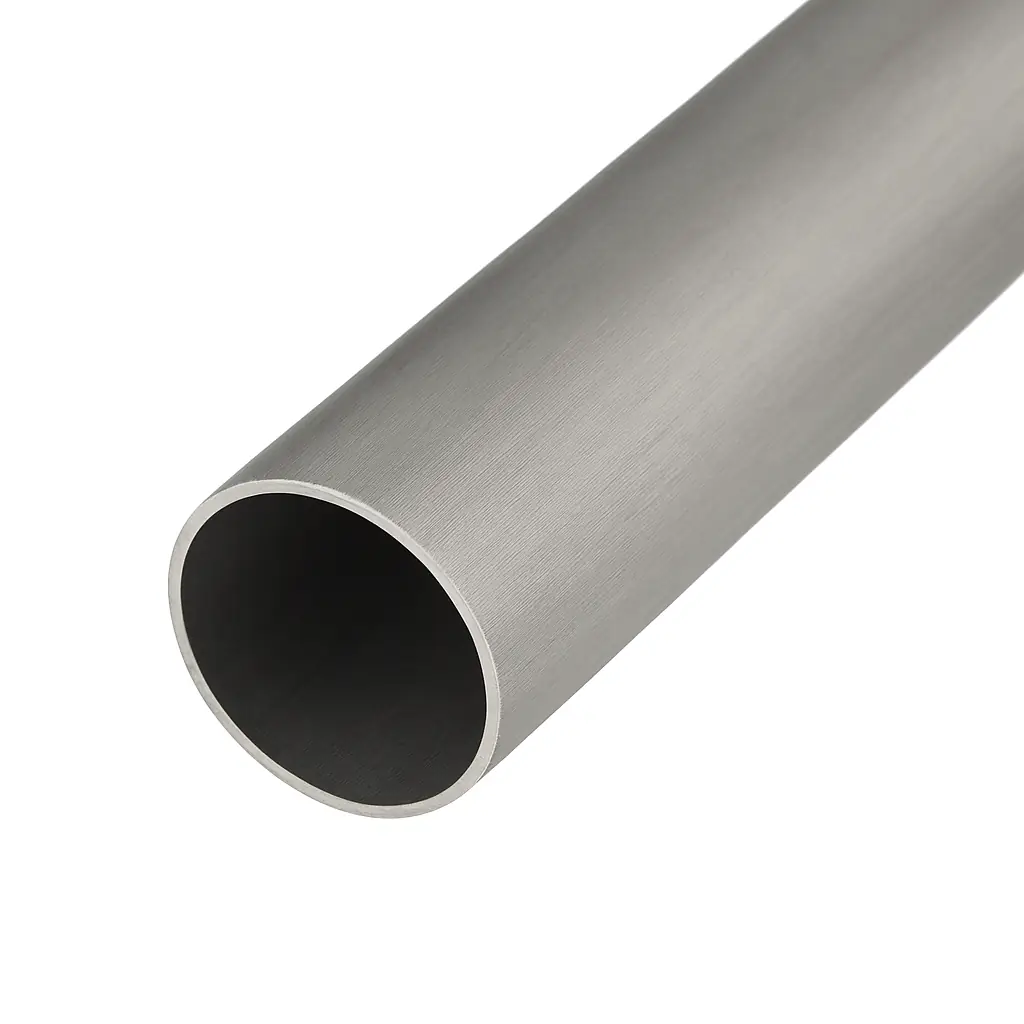
How to Measure
D = Inside Diameter
T = Schedule/Wall Thickness
L = Length

Specifications
Stainless steel pipes are long, hollow tubes that are used for a wide range of industrial applications. They are produced by two distinct methods which result in either a welded or seamless pipe. Alloy 304 stainless steel pipe provides enhanced strength and corrosion resistance and can be used for all types of fabrication processes, especially those that are subjected to outdoor environmental conditions.
For more detailed information on our alloy 304 SS pipe options, check out our blog post on the differences between steel tube and steel pipe or contact us with your specific questions.
Stainless steel 304 and 316 alloy grade pipe products are synonymous with corrosion resistance. Both grades are known for possessing some of the best corrosion resistant properties within the world of metal. Additionally, each SS pipe alloy grade maintains its own unique properties, providing variations that allow 316 and 304 stainless steel to be used for both similar and differentiating industrial applications.
Stainless steel pipe 304 provides enhanced corrosion resistance and is easy to sanitize, making it ideal for a wide range of applications within numerous industries. Since it is less expensive and easier to fabricate, stainless pipe 304 is the most widely used austenitic stainless steel pipe product in the world. Benefits of 304 stainless steel pipe include:
The chemical composition of 304 stainless pipe includes:
| Element | Composition % |
| Chromium | 18 |
| Nickel | 8 |
| Manganese | 2 (Max) |
| Iron | Balance |
304 stainless steel pipe maintains numerous applications, some of the most prevalent include:
Industrial Metal Supply offers stainless steel pipe in varying sizes and weights depending on your application needs.
Ordering
Strong, sanitary, and corrosion-resistant—304 stainless pipe is ideal for structural, fluid, and hygienic applications.
In stock now at IMS locations in CA & AZ – Contact us today!
Please select product dimensions
How to Measure
D = Inside Diameter
T = Schedule/Wall Thickness
L = Length
Specifications
Stainless steel pipes are long, hollow tubes that are used for a wide range of industrial applications. They are produced by two distinct methods which result in either a welded or seamless pipe. Alloy 304 stainless steel pipe provides enhanced strength and corrosion resistance and can be used for all types of fabrication processes, especially those that are subjected to outdoor environmental conditions.
For more detailed information on our alloy 304 SS pipe options, check out our blog post on the differences between steel tube and steel pipe or contact us with your specific questions.
Stainless steel 304 and 316 alloy grade pipe products are synonymous with corrosion resistance. Both grades are known for possessing some of the best corrosion resistant properties within the world of metal. Additionally, each SS pipe alloy grade maintains its own unique properties, providing variations that allow 316 and 304 stainless steel to be used for both similar and differentiating industrial applications.
Stainless steel pipe 304 provides enhanced corrosion resistance and is easy to sanitize, making it ideal for a wide range of applications within numerous industries. Since it is less expensive and easier to fabricate, stainless pipe 304 is the most widely used austenitic stainless steel pipe product in the world. Benefits of 304 stainless steel pipe include:
The chemical composition of 304 stainless pipe includes:
| Element | Composition % |
| Chromium | 18 |
| Nickel | 8 |
| Manganese | 2 (Max) |
| Iron | Balance |
304 stainless steel pipe maintains numerous applications, some of the most prevalent include:
Industrial Metal Supply offers stainless steel pipe in varying sizes and weights depending on your application needs.
Ordering
Strong, sanitary, and corrosion-resistant—304 stainless pipe is ideal for structural, fluid, and hygienic applications.
In stock now at IMS locations in CA & AZ – Contact us today!